
Google Review Card vs Review Software: Which Is Better for a Small Business?
Google review cards and review software are both designed to make collecting customer reviews easier, but they solve the problem in very different ways.
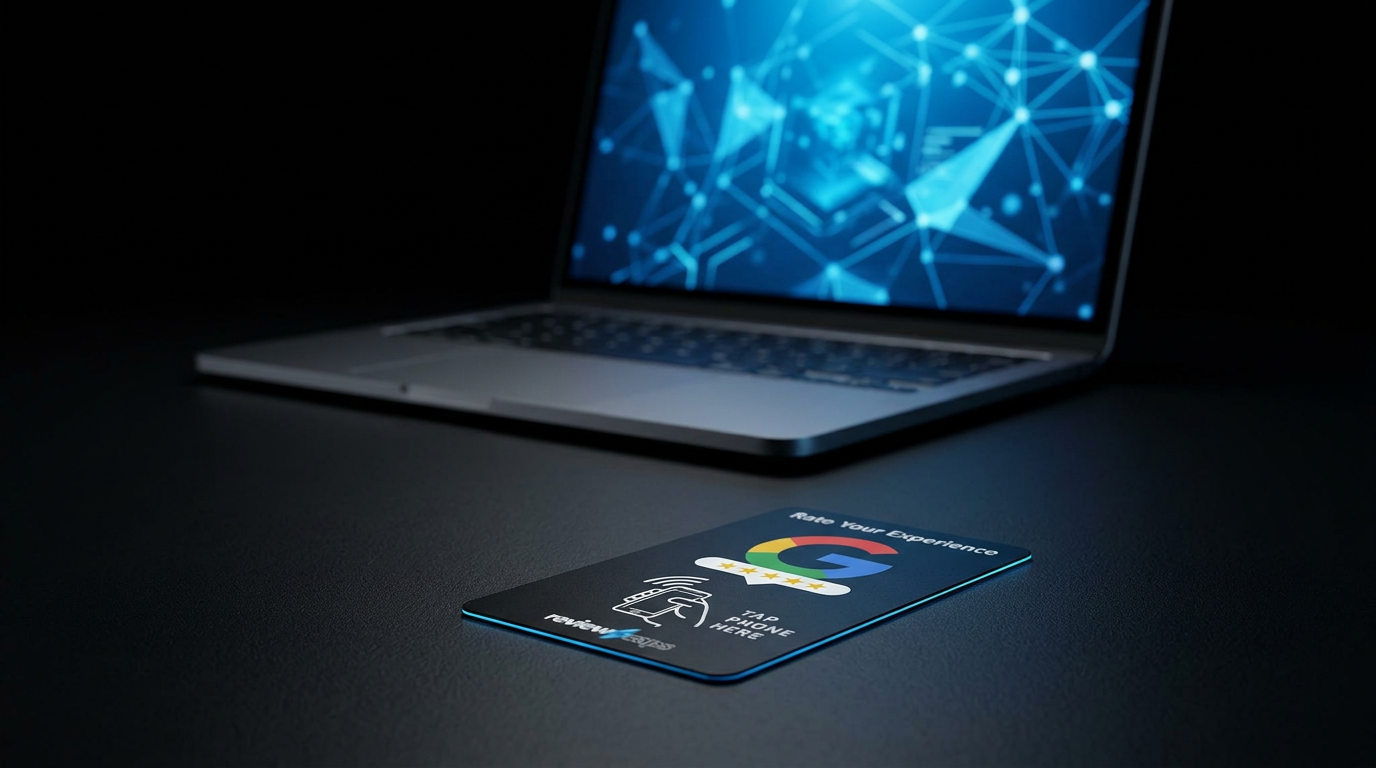
A physical NFC Google Review Card helps a business ask for a review during an in-person customer interaction.
Review software usually focuses on automating review requests through email, text messaging, customer databases, or other follow-up systems.
Neither approach is automatically better.
The right choice depends on how your business interacts with customers, how much automation you need, and whether you want another recurring software subscription.
Google Review Card vs Review Software at a Glance
| Category | Google Review Card | Review Software |
|---|---|---|
| Cost Structure | Usually a one-time physical product purchase. Review⚡️Zaps Zappy Cards do not require a monthly software subscription. | Often uses a monthly or annual software subscription, although pricing models vary. |
| Primary Use | Ask customers for reviews face to face. | Automate review requests after the customer interaction. |
| Automation | Manual. A person asks the customer to Tap. | Often automated through email, SMS, CRM integrations, or workflows. |
| Portability | Very portable and easy to carry. | Digital rather than physical. |
| Setup | Can be very simple. Typical Review⚡️Zaps setup takes about five minutes. | Varies by platform and may involve account setup, integrations, contact imports, templates, or workflows. |
| Best Fit | Businesses that regularly interact with customers in person. | Businesses that want automated follow-up at scale. |
Swipe sideways to see the full table.
What Is a Google Review Card?
A Google review card is a physical card that helps customers reach a business’s Google review page.
Many modern review cards use NFC technology.
With an NFC Google Review Card, a customer brings a compatible smartphone near the card and Taps.
The programmed link then opens the review destination configured by the business.
The card does not write the review.
It does not determine the rating.
It simply reduces the number of steps required to reach the review page.
If you are still asking “do Google review cards actually work,” our guide covers what they can and cannot do.
Review⚡️Zaps calls its NFC Google Review Cards Zappy Cards.
What Is Review Management Software?
Review management software is a broad category of online tools designed to help businesses request, monitor, organize, or respond to customer reviews.
Features vary substantially between platforms.
Depending on the software, features may include:
- automated email review requests
- automated SMS review requests
- customer contact management
- review monitoring
- response tools
- reporting
- multi-location management
- integrations with other business software
That can be valuable for businesses processing large numbers of customers or managing multiple locations.
The tradeoff is that more automation usually means more software to configure and maintain.
Many platforms also use recurring subscriptions.
The Biggest Difference Is When the Review Request Happens
The most important difference between a review card and review software may not be technology.
It is timing.
A physical review card is designed for the moment when the customer and business are still together.
The interaction might happen:
- at checkout
- after completing a service
- when handing over a finished repair
- after an appointment
- at a customer’s home
- at an event or trade show
The business can ask while the experience is still fresh.
Automated review software often reaches the customer later through email or text.
That can be useful, but it creates a different type of interaction.
One approach focuses on the immediate moment.
The other focuses on follow-up.
Review Cards Are Simple, but They Are Not Automated
This is an important limitation.
A Google review card still requires someone to ask.
A barber has to present the card.
A contractor has to pull it out.
A receptionist has to point the customer toward it.
A technician has to remember to ask.
If nobody asks, the card cannot do anything on its own.
That is where review software can have an advantage.
Once configured, an automated system may be able to send review requests without an employee remembering every time.
For a business processing hundreds or thousands of customer interactions, that automation may be useful.
Review Software Is Automated, but It Can Add Complexity
Automation has its own tradeoffs.
Depending on the software, a business may need to manage:
- another login
- customer lists
- contact permissions
- templates
- integrations
- automation rules
- billing
- staff access
- troubleshooting
That may be perfectly reasonable for a larger operation.
For a solo contractor, barber, mobile detailer, photographer, or small local business, it may be more system than they actually need.
A physical NFC review card is intentionally much simpler.
What About Monthly Subscription Costs?
This is one of the largest differences between the two approaches.
Many review management platforms operate as subscription software.
That means the business continues paying for access to the system.
Review⚡️Zaps Zappy Cards do not require a monthly software subscription.
The card can be used repeatedly after it is configured.
For a business that simply wants an easier way to ask customers for Google reviews in person, that can make the economics very different.
That does not mean subscription software is a bad value.
If a business actively uses automation, integrations, reporting, or multi-location features, the subscription may be justified.
The question is whether the business actually needs those features.
Which Is Better for Mobile and Service Businesses?
For businesses that work face to face with customers away from a fixed checkout counter, a physical card can be particularly practical.
Examples include:
- HVAC technicians
- plumbers
- electricians
- contractors
- mobile detailers
- photographers
- real estate professionals
- home service companies
- event vendors
- sales representatives
A wallet-sized NFC review card can stay in a pocket, vehicle, wallet, purse, or tool bag.
When the job is finished, the business can ask immediately.
That is very different from relying entirely on a follow-up message later.
What About Storefront Businesses?
A card can still work in a storefront, but a business with a permanent checkout or reception area may prefer something that stays visible.
That is where a countertop NFC Google Review Stand can make more sense.
Instead of an employee carrying the review tool, the Stand remains at:
- the checkout counter
- reception desk
- front desk
- register
- service counter
For a full breakdown of the two physical formats, see Google Review Card vs Google Review Stand.
Could a Business Use Both?
Yes.
These approaches are not mutually exclusive.
A business could use an NFC review card for face-to-face requests and still use software for customers who do not leave a review immediately.
For example:
The physical tool handles the immediate interaction.
The software handles follow-up.
For some businesses, that combination may be more effective than treating the two approaches as competitors.
Questions to Ask Before Choosing
Before paying for either option, ask:
- Do we regularly interact with customers in person?
- Do employees already have a natural moment when they could ask for a review?
- Do we need automated email or text follow-up?
- Do we need reporting or multi-location management?
- Do we want another monthly software subscription?
- Will staff actually use a more complicated system?
- Would a simple physical review tool solve most of the problem?
The best solution is the one that fits the way the business already operates.
When a Google Review Card Makes More Sense
A physical review card may be the better fit when:
- most customer interactions happen face to face
- the business wants a simple process
- portability matters
- employees can ask at the end of the interaction
- automated follow-up is not essential
- the business does not want another monthly software subscription
For these businesses, simplicity is often the advantage.
When Review Software Makes More Sense
Review software may make more sense when:
- customer volume is high
- automated follow-up is important
- there are multiple locations
- customer data is already stored in another system
- reporting matters
- staff cannot realistically ask every customer in person
- the business wants a broader review-management workflow
The additional functionality may justify the additional complexity and ongoing cost.
The Bottom Line
A Google review card and review software solve different parts of the same problem.
A review card makes the in-person request easier.
Review software can automate what happens afterward.
For many small service businesses, a simple NFC Google Review Card may be enough.
For larger or more automated operations, review software may provide features worth paying for.
And some businesses may benefit from using both.
The important question is not which technology has more features.
It is which one fits the way your business actually interacts with customers.


